
In the vibrant tapestry of West African cuisine, egusi soup stands out as a beloved staple-rich, hearty, and bursting with bold flavors. Traditionally crafted with ground melon seeds and savory meats or fish, this iconic dish has long been a symbol of comfort and community around the dinner table.
- Prep and Cook Time: A Delicious West African Journey
- Yield
- Difficulty Level
- Ingredients for Your West African Egusi Soup
- Instructions for Making West African Egusi Soup
- Expert Tips for Balancing Texture and Spice in Your Plant-Based Egusi Delight
- Serving Suggestions for West African Egusi Soup
- Q&A: Your West African Egusi Soup Questions Answered
- Key Takeaways on West African Egusi Soup
But what if you could savor the same depth and soulfulness without using any animal products? Enter the world of plant-based delight: a vegan West African Egusi soup that honors tradition while embracing modern, compassionate cooking.
When it comes to West African, we’ll explore how to recreate the creamy, nutty essence of Egusi using wholesome, entirely plant-based ingredients-inviting both seasoned cooks and curious food lovers alike to experience a nourishing taste of Africa’s culinary heritage in a fresh, vibrant way.

Plant-Based Delight: vegan West African Egusi Soup Recipe invites you on an enriching culinary journey that celebrates tradition and innovation. Originating from Nigeria, Egusi soup is a beloved dish crafted with melon seeds that have been ground to a creamy, nutty base, traditionally paired with rich meats and fish.
In this vegan evolution, we elevate the soul of the dish using carefully selected plant-based ingredients, transforming it into a thick, luscious stew bursting with authentic West African flavors – all while embracing compassion and sustainability.
Prep and Cook Time: A Delicious West African Journey
- Planning: 20 minutes
- Cooking: 40 minutes
- Total: 1 hour
Yield
Serves 6 hearty portions – perfect for family dinners or meal prep.
Difficulty Level
Medium – approachable for cooks with basic knife skills and familiarity with sautéing and simmering.
Ingredients for Your West African Egusi Soup
- 1 cup egusi (melon) seeds, finely ground
- 2 tablespoons red palm oil (for authentic richness)
- 1 large onion, diced
- 3 garlic cloves, minced
- 1 tablespoon grated fresh ginger
- 2 medium tomatoes, blended or finely chopped
- 1 Scotch bonnet pepper, finely chopped (adjust for spice tolerance)
- 3 cups vegetable broth, low sodium
- 2 cups chopped kale or spinach leaves, tightly packed
- 1 cup diced shiitake or cremini mushrooms (adds umami and meaty texture)
- 1 cup cooked chickpeas (rinsed and drained)
- 2 tablespoons ground crayfish alternative (optional, for smoky depth; can substitute with smoked paprika)
- Salt and freshly ground black pepper, to taste
- 1 teaspoon smoked paprika (to enhance the smoky undertones)
- 2 tablespoons crushed dried locust beans (iru), optional for authentic aroma
- 1 tablespoon lemon juice (for a touch of brightness)
Instructions for Making West African Egusi Soup
- prepare the egusi seeds: Toast the ground melon seeds in a dry pan over medium heat, stirring constantly until fragrant and slightly golden, about 3-4 minutes. This unlocks their nutty flavor. Remove and set aside.
- Sauté aromatics: Heat the red palm oil in a heavy-bottomed pot over medium heat. Add diced onions, sautéing until translucent and sweet, about 5 minutes. Stir in garlic, ginger, and scotch bonnet pepper, cooking for another 2 minutes to release vibrant aromas.
- Incorporate tomatoes and mushrooms: Stir in blended tomatoes and cook until the mixture thickens and the oil starts to separate, about 8 minutes. Add mushrooms and sauté until tender and their moisture evaporates, approximately 5 minutes more.
- Add seasonings and broth: Mix in smoked paprika, locust beans (if using), and optional ground crayfish alternative or smoked paprika to deepen complexity. Pour in vegetable broth and bring to a gentle boil.
- Thicken the soup: Gradually sprinkle in the toasted egusi seeds while stirring briskly to prevent lumps. Reduce heat to low, cover, and simmer for 15-20 minutes, allowing the soup to thicken into a creamy, stew-like consistency. Stir occasionally to avoid sticking.
- Finish with greens and chickpeas: Add chopped kale or spinach along with cooked chickpeas. Let simmer 5 minutes, just until greens wilt beautifully, retaining their vibrant color and texture.
- Balance flavors: Season with salt, black pepper, and lemon juice. Taste and adjust seasonings as desired. The lemon juice adds a refreshing contrast, lifting the deep, savory notes.
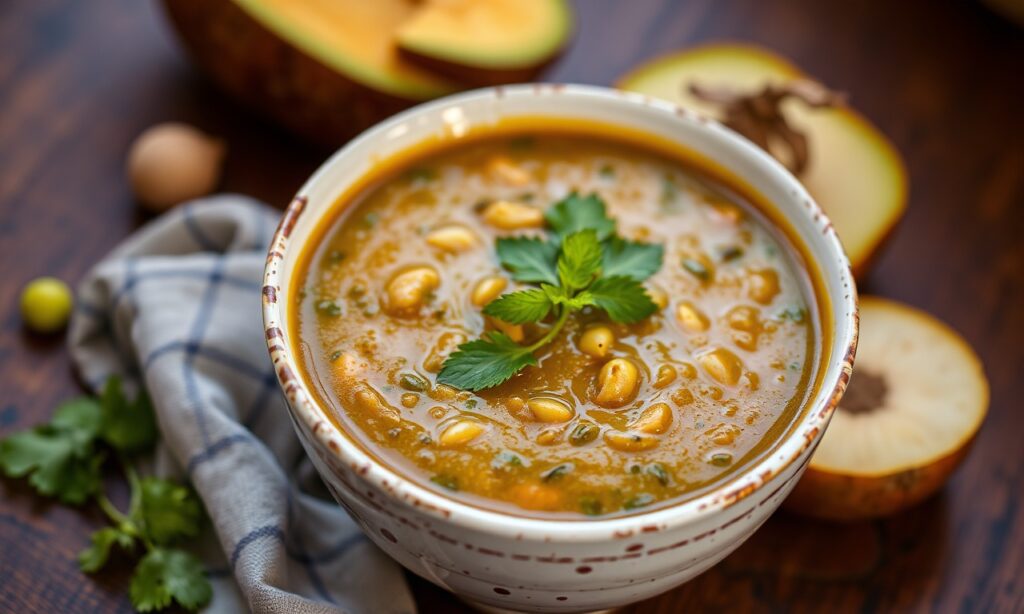
- Serve hot: Ladle your luscious vegan Egusi Soup into bowls and garnish with fresh parsley or sliced scallions for a crisp, green finish.
Expert Tips for Balancing Texture and Spice in Your Plant-Based Egusi Delight

- Textural harmony: Combining creamy ground egusi with hearty mushrooms and chickpeas creates a delightful interplay between softness and chewiness that mimics the heartiness of traditional versions.
- Spice control: Adjust the Scotch bonnet pepper cautiously; for a milder dish, remove seeds and membranes or substitute with jalapeño. Remember, the smoky paprika adds warmth without intense heat.
- Palm oil magic: Red palm oil is essential for authentic flavor and color. If unavailable, use unrefined coconut oil with a touch of smoked paprika as a substitute, but the character will shift slightly.
- Make ahead: This soup reheats beautifully and often tastes better the next day as flavors meld. Store in airtight containers in the fridge for up to 4 days or freeze portions for up to 3 months.
- Unsweetened nut butters: For an extra creamy twist, stir in a tablespoon of natural almond or cashew butter along with the egusi. This adds richness while maintaining plant-based integrity.
Serving Suggestions for West African Egusi Soup
Traditionally enjoyed alongside starchy fufu like pounded yam, cassava, or plantain, this plant-based delight pairs beautifully with smooth, dense sides that soak up the thick, flavorful sauce. For a gluten-free feast, serve it with steamed rice or quinoa.
Garnish with freshly chopped herbs such as parsley or cilantro, a drizzle of extra palm oil, or toasted pumpkin seeds for added crunch. A side of sliced avocado or a simple tomato and cucumber salad provides fresh contrast. This vibrant presentation not only dazzles the eyes but highlights the soup’s rich layers of flavor.
| Nutrient | Per Serving |
|---|---|
| Calories | 320 kcal |
| Protein | 14 g |
| Carbohydrates | 20 g |
| fat | 18 g |
Learn more about Egusi Soup history & culture on Wikipedia
Q&A: Your West African Egusi Soup Questions Answered
Q1: what exactly is Egusi Soup?
A: Egusi Soup is a beloved West African stew, traditionally made with ground melon seeds (egusi), vegetables, and a rich, savory broth. It’s celebrated for its creamy texture and nutty flavor, often enjoyed with fufu, rice, or plantains. Our vegan version keeps the heartiness intact while embracing plant-based ingredients.
Q2: What makes Egusi seeds special in this recipe?
A: Egusi seeds are oil-rich melon seeds that, when ground, act as both a thickener and flavor enhancer in the soup. They provide a distinct nuttiness and a satisfying texture that’s key to authentic Egusi Soup’s soul-warming quality.
Q3: How do you make Egusi Soup fully plant-based without losing its traditional essence?
A: The magic lies in using a base of rich vegetable broth, combined with plenty of leafy greens and hearty mushrooms or tofu for added body. Instead of meat and fish, smoky spices like smoked paprika or umami-packed ingredients such as miso or fermented locust beans enrich the flavor, ensuring depth without animal products.
Q4: Can I find egusi seeds easily outside West Africa?
A: Yes! Many international grocery stores and online marketplaces stock dried or ground egusi seeds. If egusi isn’t available, you can experiment with ground pumpkin seeds or sunflower seeds as a close substitute, though the authentic taste shines brightest with true egusi.
Q5: What vegetables work best in vegan Egusi Soup?
A: Traditional choices include bitterleaf, spinach, or kale-greens that add earthiness and balance the nutty richness of the egusi. Okra is also a popular addition for its subtle thickness and flavor. Feel free to blend in your favorite leafy greens to customize the soup.
Q6: How do I serve this soup for a satisfying meal?
A: Egusi Soup pairs beautifully with starchy sides like pounded yam, fufu, or even steamed rice. For a more casual vibe, serve alongside boiled or fried plantains, which lend a natural sweetness that complements the savory broth perfectly.
Q7: Is this dish suitable for beginners in West African cooking?
A: Absolutely! While it might seem complex at first, the steps are straightforward: grind your seeds, sauté your aromatics, and simmer everything together. It’s a rewarding introduction to West African flavors, especially for those exploring vegan cooking.
Q8: How can I store leftovers, and does the flavor change?
A: Store leftover Egusi Soup in an airtight container in the fridge for up to 3 days. The flavors often deepen overnight, making your next meal even more delicious. For longer storage, freeze portions for up to a month and thaw gently before reheating.
Q9: Are there any cultural customs or traditions associated with Egusi Soup?
A: Egusi Soup is more than a dish-it’s a festive staple at many West African celebrations and family gatherings. Sharing it embodies warmth, community, and the rich heritage of the region’s culinary landscape.
Q10: Can I adjust the spice level to my liking?
A: Definitely! This soup welcomes a touch of chili or fresh peppers to add heat, but it’s equally delicious mild. Adjust according to your palate-Egusi is as versatile as the cook’s creativity allows.
Enjoy crafting your own plant-based journey through West Africa with this comforting, vibrant Egusi Soup!
Key Takeaways on West African Egusi Soup
As you savor the rich, nutty flavors of this vegan West African Egusi soup, you’re not just enjoying a meal-you’re partaking in a vibrant culinary tradition that celebrates plant-based goodness and cultural heritage. This dish beautifully marries wholesome ingredients with bold spices, proving that vegan cooking can be both comforting and exhilarating. Whether you’re a seasoned plant-based eater or an adventurous foodie, egusi soup invites you to explore the depth of West African cuisine in a nourishing, compassionate way. So gather your ingredients, embrace the ritual of cooking, and let each spoonful transport you to a flavorful world where plants take center stage and every bite tells a story.

See also: West African