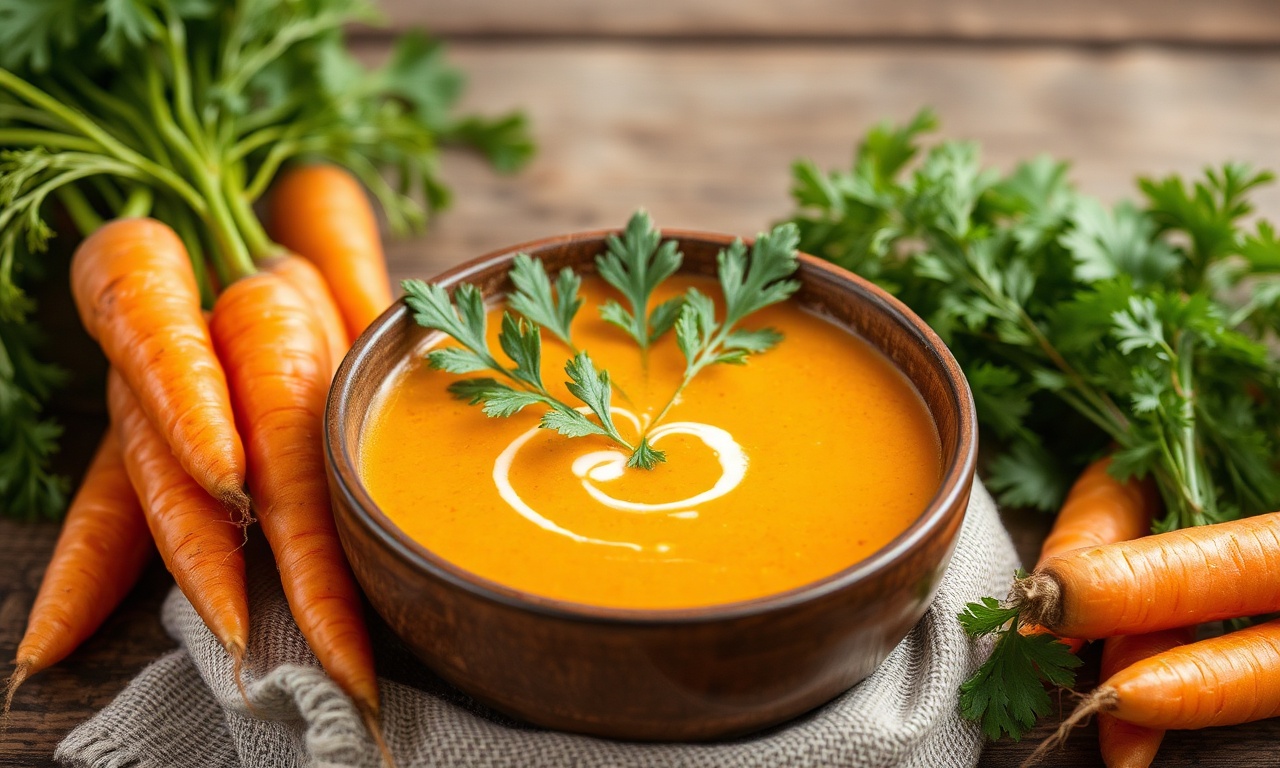
There’s something truly magical about turning carrots fresh from a sun-warmed garden into a steaming bowl of vibrant soup. This garden-fresh carrot soup brings pure, earthy sweetness to the spoon, with a texture that feels both comforting and clean.
- Why Garden-Fresh Carrots Make the Best Soup
- Prep, Cook, and Yield
- Ingredients for Garden-Fresh Carrot Soup
- Step-by-Step Instructions
- 1) Prepare the carrots
- 2) Sauté aromatics
- 3) Add garlic and spices
- 4) Cook carrots and build flavor
- 5) Simmer in broth
- 6) Blend to perfection
- 7) Stir in creaminess
- 8) Serve with texture and freshness
- Chef’s Tips for Success
- Serving Suggestions That Boost Dwell Time
- Nutritional Snapshot (Per Serving)
- Frequently Asked Questions About Garden-Fresh Carrot Soup
- What makes garden-fresh carrot soup different from regular carrot soup?
- Can I make it without coconut milk?
- How do I keep the soup velvety and not grainy?
- How long does it last in the fridge or freezer?
- What spices pair best with carrots in soup?
- Key Takeaways
Beyond its radiant orange color, this recipe also creates a real connection to the food you grow. You get seasonal flavor, simple ingredients, and wholesome nourishment that tastes like home.
At a Glance
- Flavor-first: carrots shine with gentle simmering and smooth blending.
- Easy method: sauté aromatics, simmer, then puree until velvety.
- Make-ahead friendly: tastes better the next day and freezes well.
- Customizable: coconut milk or dairy cream for richness.
Garden-Fresh Carrot Soup is a celebration of nature’s bounty, where homegrown sweetness leads every bite.
When you start with fresh carrots, you also start with better aroma and a brighter flavor. That difference comes from the way fresh produce holds natural sugars and pigments like beta-carotene.
Why Garden-Fresh Carrots Make the Best Soup
Fresh carrots taste sweeter and more aromatic than many store options, especially when harvested at peak ripeness. If you grow your own, you can time harvest for crunch, then cook soon after.
Carrots also contain carotenoids, which support the soup’s vivid color and warm flavor notes. When you simmer gently, those compounds stay stable and help the soup feel naturally rich.
For gardeners, the benefit is simple: you control freshness from soil to pot. For busy cooks, it’s still practical—buying from a local farm stand can deliver similar quality.
Prep, Cook, and Yield
This soup keeps the process straightforward, so you spend more time tasting and less time fussing. You’ll also get a smooth result without complicated steps.
Prep: 15 minutes | Cook: 35 minutes | Total: 50 minutes
Yield: Serves 4 generous bowls
Difficulty: Easy
Ingredients for Garden-Fresh Carrot Soup
You only need a small set of ingredients, and each one supports the carrot flavor. Use fresh carrots whenever possible, then build depth with aromatics and spices.
For best results, choose a vegetable broth you trust. If you make broth at home, your soup gets even more rounded.
- 2 lbs fresh garden carrots, peeled and chopped into 1-inch pieces
- 1 large onion, finely diced
- 2 cloves garlic, minced
- 3 cups vegetable broth, preferably homemade or low sodium
- 1 cup full-fat coconut milk (or heavy cream for richer texture)
- 2 tablespoons olive oil
- 1 teaspoon ground cumin
- 1/2 teaspoon fresh grated ginger
- Salt and freshly cracked black pepper, to taste
- Fresh thyme sprigs for garnish
- Crunchy toasted pumpkin seeds (optional, for texture)
Step-by-Step Instructions
Follow these steps in order for the smoothest texture and the most even flavor. Each stage adds something specific—sweetness, aroma, then silkiness.
Use a heavy-bottomed pot to prevent hot spots. Stir often during early steps, then simmer until carrots turn tender.
1) Prepare the carrots
Wash, peel, and chop the carrots into uniform 1-inch pieces. Uniform pieces cook at the same speed, so you avoid underdone chunks.
If your carrots are very small, cut them slightly larger than 1 inch so they still hold shape before blending.
2) Sauté aromatics
Heat olive oil over medium heat in a large pot. Add diced onion and sauté until translucent and lightly golden, about 5 minutes.
Stir often to prevent browning too fast. Properly cooked onion creates a sweet base that supports the carrot flavor.
3) Add garlic and spices
Add minced garlic, cumin, and grated ginger. Cook for 1–2 minutes to toast spices and wake up aromas.
Keep heat moderate. If garlic browns too hard, it can turn bitter and dull the soup’s natural sweetness.
4) Cook carrots and build flavor
Add carrots to the pot and stir until well coated. Cook for about 5 minutes so the vegetables start to soften and caramelize slightly.
Carrot browning is a gentle process, not a deep sear. This step helps your final soup taste more layered.
5) Simmer in broth
Pour in vegetable broth and bring to a gentle boil. Reduce heat and simmer uncovered for 25 minutes, until carrots pierce easily with a fork.
Simmering time can vary by carrot thickness. Start checking around 20 minutes so you don’t overcook.
6) Blend to perfection
Remove the pot from heat. Blend with an immersion blender until smooth and silky.
If you blend in batches, work carefully and don’t overfill the blender jar. The goal is a consistent puree with no fibrous bits.
7) Stir in creaminess
Stir in coconut milk (or cream) and season with salt and black pepper. Warm gently over low heat for 3–5 minutes.
Avoid a hard boil after adding dairy or coconut milk. Gentle heating keeps the soup smooth and prevents separation.
When seasoning is correct, the soup tastes sweet and balanced, not flat or overly spiced. A final pinch of pepper can also lift the aroma right before serving.
8) Serve with texture and freshness
Ladle soup into bowls and garnish with thyme sprigs. Add toasted pumpkin seeds for a crunchy contrast.
For extra vibrancy, drizzle a small amount of olive oil or finish with a squeeze of lemon if you want a brighter edge.
Expert Insight: For the smoothest mouthfeel, blend the soup while it’s still hot and give it an extra 20–30 seconds after it looks fully pureed. This reduces tiny remaining fibers and improves creaminess.[/TIP]
Chef’s Tips for Success
Small choices make a measurable difference in how the soup tastes. Use these tips to dial in sweetness, texture, and storage.
Carrots differ by variety and age, so taste as you cook. Adjust with salt and a touch of acidity if needed.
Harvest timing
Carrots taste sweetest when harvested before they turn overly large or woody. Early morning picking often gives the best crunch.
If you buy carrots, choose ones that feel firm and look vibrant. Avoid limp or heavily cracked roots.
Texture balance
If you want a chunkier soup, reserve about 1/2 cup of chopped carrots. Simmer them a bit longer, then fold them back after blending.
This method keeps the soup creamy while still giving spoonfuls that feel hearty.
Flavor variations
Add a pinch of smoked paprika for a gentle smoky layer. You can also add a small squeeze of orange juice at the end to brighten the flavor.
For a more traditional profile, keep cumin but reduce ginger slightly. The balance stays warm without overpowering carrot sweetness.
Make-ahead and storage
Store in the refrigerator for up to 3 days in an airtight container. Reheat slowly on the stovetop and stir until smooth.
Freeze for up to 2 months. Thaw in the fridge overnight, then reheat gently and whisk well.
Serving Suggestions That Boost Dwell Time
This soup works as a standalone meal, but the right sides increase satisfaction. Choose crisp, acidic, or crunchy companions to balance the creamy base.
Serve it with a mixed greens salad and lemon vinaigrette. The tang lifts the flavor and keeps the meal light.
Bread and garnishes
A wedge of rustic sourdough or warm garlic naan makes a perfect dipper. For extra aroma, brush bread with olive oil and toast briefly.
Garnish with toasted seeds, fresh thyme, and a drizzle of olive oil. That texture contrast makes each spoonful feel intentional.
Pairing with nutrition-minded sides
If you want a more nutrition-focused plate, pair the soup with roasted vegetables like Brussels sprouts or green beans. The flavors match well without crowding the carrots.
Carrots pair naturally with dishes that include herbs and greens, since both contribute freshness. You can also reference the broader vegetable benefits using vegetable nutrition basics to guide side choices.
Nutritional Snapshot (Per Serving)
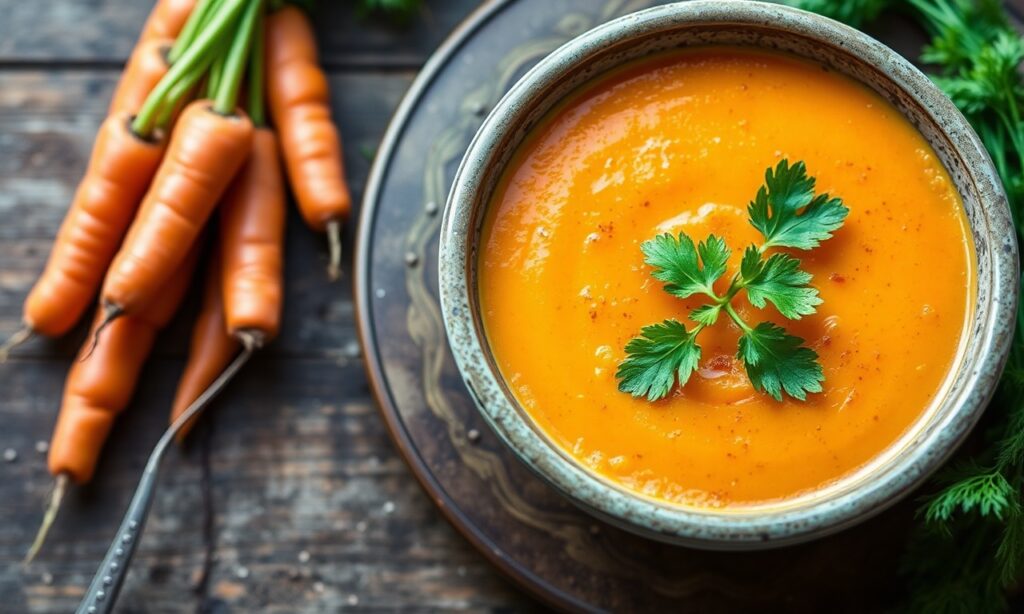
Here’s an easy estimate for a typical bowl. Actual values vary by carrot size, broth choice, and whether you use coconut milk or cream.
Use this section to set expectations, then adjust ingredients if you want a lighter or richer version.
| Nutrient | Per Serving |
|---|---|
| Calories | 180 kcal |
| Protein | 3 g |
| Carbohydrates | 28 g |
| Fat | 7 g |
| Fiber | 5 g |
Carrots are known for providing dietary fiber and plant compounds. If you want to study how fiber works in the diet, review dietary fiber and how it supports digestion.
For soup lovers, fiber also helps you feel full after meals, which supports better portion control. That’s one reason carrot-based soups can feel satisfying.
Frequently Asked Questions About Garden-Fresh Carrot Soup
These answers address common cooking questions so you can make the soup with confidence. Use them to troubleshoot texture, flavor, and storage.
If you want the smoothest results, keep your blending time steady and re-season after adding creaminess.
What makes garden-fresh carrot soup different from regular carrot soup?
Garden-fresh carrot soup tastes sweeter and more fragrant because freshly harvested carrots retain more natural flavor compounds. When you cook quickly after harvesting, the soup feels brighter and more vibrant.
Carrots also bring strong color from carotenoids, which supports a natural richness in appearance and aroma. You can read more about carotene in this carotene overview.
Can I make it without coconut milk?
Yes. Use heavy cream or a dairy-free alternative you trust, like cashew cream, to keep the texture smooth and creamy.
After you add the alternative, warm gently and avoid boiling. This protects the texture and keeps the soup tasting clean.
How do I keep the soup velvety and not grainy?
Simmer until carrots are fully tender, then blend thoroughly while hot. If you notice graininess, blend longer or strain once for a restaurant-style finish.
Also, use uniform carrot cuts so no pieces stay undercooked. Under-cooked fibers create a gritty texture after blending.
How long does it last in the fridge or freezer?
In the refrigerator, store it up to 3 days in an airtight container. Reheat on low to medium-low heat and stir until fully smooth.
In the freezer, it keeps up to 2 months. Thaw in the fridge overnight, then reheat gently and taste again for salt.
What spices pair best with carrots in soup?
Cumin and ginger work especially well because they add warmth without overpowering natural sweetness. Thyme also fits naturally with the earthy notes of carrots.
If you want a reference point for cooking with herbs, see herb basics for how aromatic leaves influence flavor.
Key Takeaways
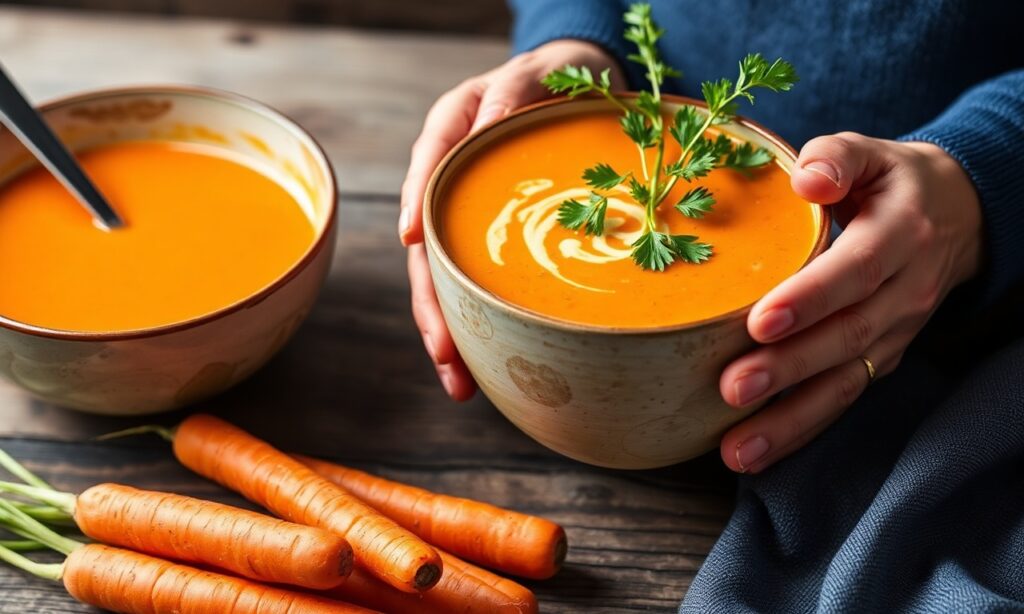
Every bowl of garden-fresh carrot soup proves that simple ingredients can deliver big comfort. When you start with fresh carrots and cook with care, you get a soup that feels both nourishing and bright.
Harvest or select carrots at peak ripeness, sauté aromatics, simmer until tender, and blend until smooth. Then finish with creaminess and garnish for the final layer of joy.
To understand more about vegetables and their role in balanced diets, you can also reference vegetable and how they fit into everyday meals.
See also: Garden-Fresh Carrot Soup