
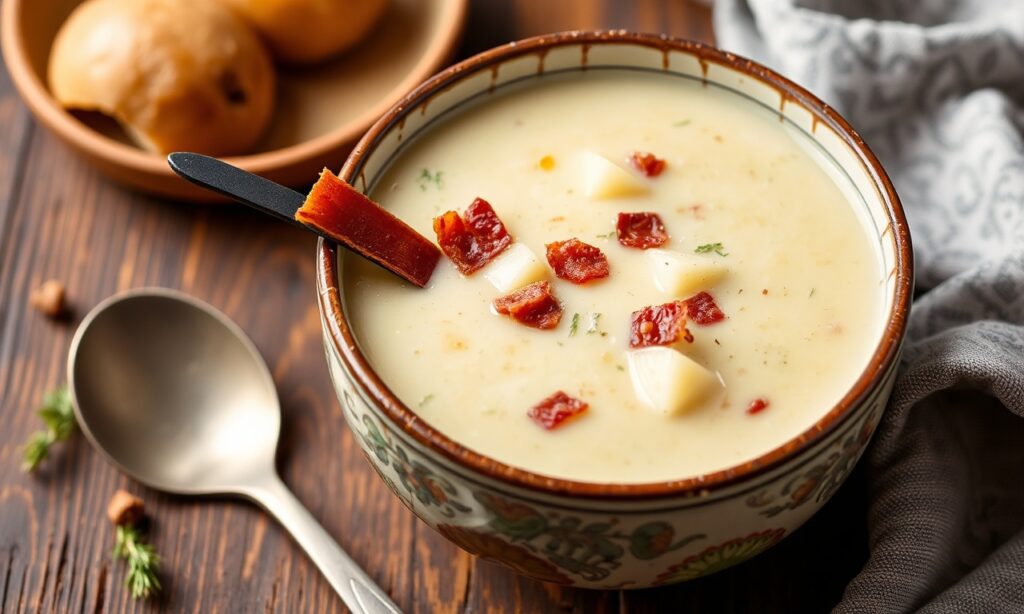
When chilly days settle in, few meals deliver warmth and comfort as quickly as bacon and potato soup. This hearty bowl brings smoky bacon, tender potatoes, and a creamy-leaning broth for weeknight satisfaction.
- Bacon and Potato Soup: Cozy Comfort Classic
- Choose Bacon for Rich, Smoky Flavor
- Select Potatoes for the Texture You Want
- Master the Method for a Thick, Hearty Soup
- Fresh Herbs and Toppings That Make It Feel Homemade
- Quick Troubleshooting for Thin or Bland Soup
- Make It Family-Friendly: Sides and Serving Ideas
- Q&A: Bacon and Potato Soup (Cozy Comfort Classic)
- What makes bacon and potato soup so comforting?
- How do I get a thick soup without using flour?
- What potatoes work best for this recipe?
- Can I make this soup dairy-free?
- How long can I store leftovers?
- FAQ Add-On: Common Timing Mistakes
- The Conclusion: Reliable Cozy Bacon and Potato Soup
- Thickness comes naturally from potato starch plus partial mashing.
- Flavor starts with rendered bacon fat and properly cooked aromatics.
- Simmer gently so starch stays smooth, not gluey.
- Finish with dairy and toppings to lock in richness.
Comfort-food classics work because they use familiar ingredients and predictable methods. You can keep this soup rustic, or adjust richness with milk, cream, and cheese.
Below, you’ll find clear steps for thick broth, smart ingredient swaps, and serving ideas that keep people at the table longer. You’ll also learn what causes thin soup and how to fix it fast.
Bacon and Potato Soup: Cozy Comfort Classic
Bacon adds savory smoke and salt, while potatoes add body. As you simmer, potatoes release starch, and that starch thickens the broth.
This style of soup often leans on rendered fat and cooked aromatics for depth. If you’ve ever made roux-free soups, you’ll recognize the logic: build flavor first, thicken later.
Potatoes matter because they break down under heat and help thicken liquids. For a deeper food background, review potato and how it cooks in stews and soups.
Bacon also plays a specific flavor role: curing and smoking change aroma compounds that carry into the fat. For general context, read about bacon and why cured meats taste distinct from fresh pork.
Choose Bacon for Rich, Smoky Flavor
Start with bacon that renders well. Thick-cut bacon gives you crisp bits and enough fat to sauté onions and garlic.
Cooking method affects bitterness. If you burn the bacon, the fat turns harsh, and no seasoning can fully correct it.
Smoke integration improves when you render bacon gently and keep the heat stable. For the process behind cured flavors, see curing and how it shapes taste.
If you want a quick upgrade, choose bacon with a flavor profile you enjoy on its own. Then use that rendered fat as your base, so the soup tastes cohesive from first spoonful to last.
[WARNING]Pro-Caution on Pre-Cooked Bacon
Pre-cooked bacon often renders less fat in the pan. That can leave your soup thinner and less smoky than the classic approach.
It can also add extra salt early, which makes it harder to balance later. If you use it, simmer longer and taste often before you add any dairy.
Select Potatoes for the Texture You Want
Potatoes set the soup’s texture. Use starchy varieties for thickening and chunk-friendly results, and use firmer varieties when you want more intact pieces.
Russet potatoes tend to break down more and thicken broth faster. Yukon Gold often holds shape better while still delivering a creamy mouthfeel.
Cut potatoes into similar-sized pieces so each chunk reaches tenderness at the same time. Uneven sizes often cause a mix of hard bites and mushy spots.
Potato starch and cooking behavior drive much of the thickening effect. For supporting details, read about starch and how heat changes it in liquids.
Master the Method for a Thick, Hearty Soup
Your thickness comes from two steps: render bacon, then simmer potatoes until they soften. After that, mash part of the batch to raise the natural starch level.
Cook the bacon over medium heat until crisp. Remove it, then sauté onions and garlic in the rendered fat until fragrant and softened.
Add potatoes and broth next. Use a gentle simmer, not a hard boil, so starch releases gradually and stays smooth.
Stir occasionally while simmering. This keeps starch suspended and reduces the chance of a gluey layer at the bottom.
When the soup looks glossy and thick enough to coat a spoon, add dairy if you want extra richness. Add slowly and warm it through so you avoid sudden temperature swings.
If you want a general reference for controlled heat, review simmer and why gentle heat improves texture.
Fresh Herbs and Toppings That Make It Feel Homemade
Customization keeps bacon and potato soup interesting all year. Herbs add freshness, while toppings add crunch, salt, and creamy contrast.
Use fresh chives for mild onion notes, parsley for brightness, or thyme for earthy warmth. Add herbs near the end so you keep their aroma instead of cooking it off.
Classic toppings include crispy bacon crumbles, shredded sharp cheddar, and a sour cream swirl. These toppings also help balance salt with fat and add satisfying texture.
For heat, use smoked paprika or a small pinch of cayenne. Stir, taste, and adjust slowly so the soup stays balanced rather than aggressive.
To round the flavor, finish with black pepper and green onions. Serve right away after dairy and toppings so the soup stays thick, not watery.
Herbs influence aroma and perception of flavor, not just taste. For background, see herb.

Quick Troubleshooting for Thin or Bland Soup
Thin soup usually means you didn’t extract enough starch or you diluted too fast. Two fixes work reliably: simmer a bit longer or mash more of the potatoes.
If the soup tastes flat, start with seasoning and salt balance. Bacon carries salt, but potatoes and broth need their own seasoning too.
Also check your heat control. A rolling boil can break texture and cause uneven starch release, while gentle simmering produces smoother thickening.
For a helpful view of how boiling and water behavior affects cooking, see boiling and why controlled heat matters for texture.
Make It Family-Friendly: Sides and Serving Ideas
Bacon and potato soup invites simple pairings. Serve it with crusty bread, dinner rolls, or cornbread so people can scoop and dip.
A simple green salad also works well because acidity and crunch cut the soup’s richness. Add lemon or a light vinaigrette so the flavors pop.
If you want a heartier table, try roasted vegetables or a warm side of steamed greens. This keeps the meal balanced without competing with bacon smoke.
For extra dwell time, serve toppings on the side. People enjoy customizing their bowls, and that keeps the experience interactive.
Q&A: Bacon and Potato Soup (Cozy Comfort Classic)
What makes bacon and potato soup so comforting?
It combines smoky bacon with starchy potatoes that thicken the broth. That creates both depth and a spoon-coating texture that feels like home.
How do I get a thick soup without using flour?
Simmer potatoes until soft, then mash about one-third of them. Potato starch thickens naturally, and extra simmer time helps it integrate.
What potatoes work best for this recipe?
Russet potatoes thicken faster because they break down more. Yukon Gold delivers a creamier feel with more visible chunks.
Can I make this soup dairy-free?
Yes. Use vegetable broth plus a richer base like extra sautéed aromatics, then skip milk and cream. You can still thicken by mashing potatoes thoroughly.
How long can I store leftovers?
Store leftovers in a sealed container in the fridge. Reheat gently on the stove and stir well, since thickness can change as it cools.
FAQ Add-On: Common Timing Mistakes
Why is my soup grainy?
Graininess often comes from under-mashing or boiling too hard. Mash the tender potatoes and simmer gently to keep starch smooth.
Why does it taste bland after reheating?
Salt and smoke can feel muted when flavors cool. Taste after reheating and adjust with salt, pepper, and a small splash of broth if needed.
The Conclusion: Reliable Cozy Bacon and Potato Soup
This bacon and potato soup delivers classic comfort: smoky depth, tender potatoes, and a thick broth that coats a spoon. Follow rendering and gentle simmer steps, then finish with dairy and toppings for the best texture.
When you mash part of the potatoes and warm dairy slowly, the soup stays thick and satisfying. Adjust herbs, heat, and cheese to match your taste, and you’ll repeat it because the method stays dependable.
For broader comfort-food context around soups and how cooking changes flavor, read soup.
See also: bacon and potato soup