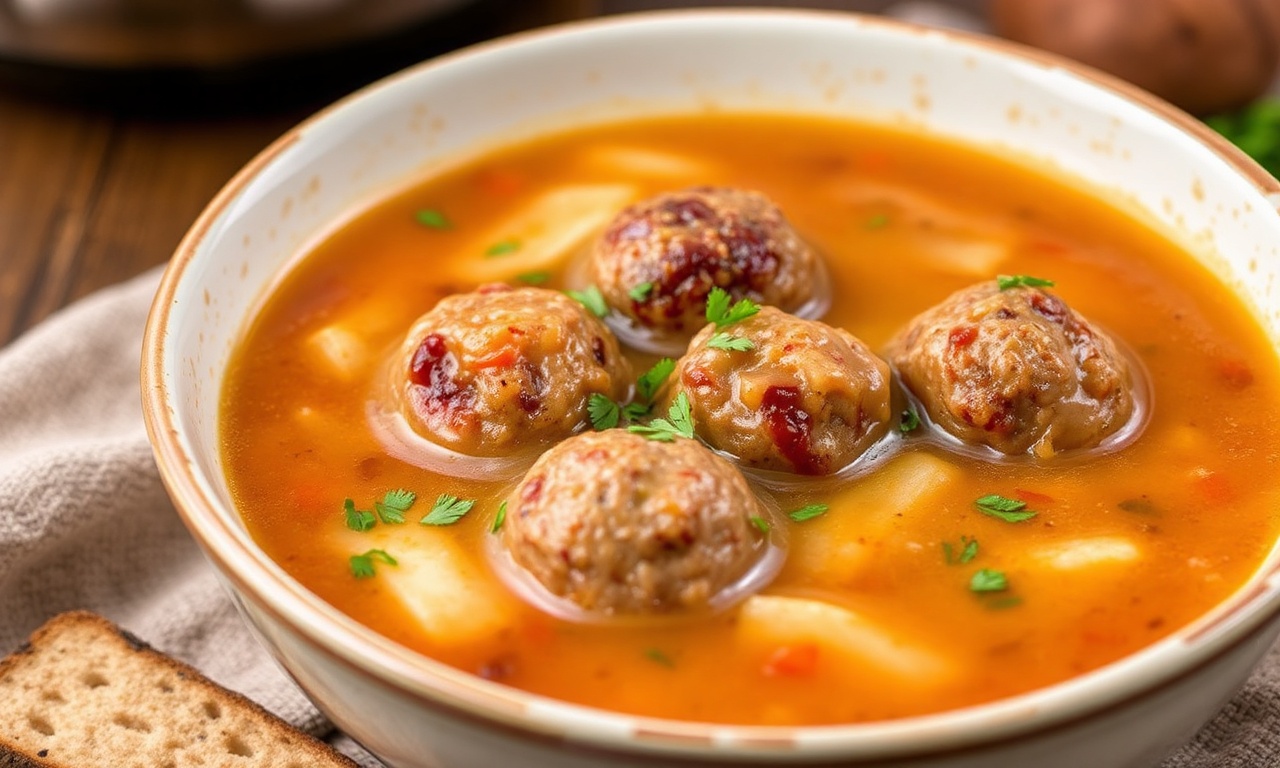
Few meals match the comfort of a steaming bowl of soup. When you add tender meatballs to a savory broth, the result tastes richer and feels more satisfying. Savory Meatball Soup turns everyday pantry ingredients into a warm, belly-filling dinner that works for both weeknights and weekends.
- Prep and Cook Time
- Yield
- Difficulty Level
- Ingredients
- Instructions
- 1) Prepare the Meatball Mixture
- 2) Shape the Meatballs
- 3) Sear the Meatballs
- 4) Sauté Vegetables (Mirepoix Base)
- 5) Add Garlic and Herbs
- 6) Deglaze and Build the Broth
- 7) Simmer the Soup
- 8) Finish with Greens
- 9) Adjust Seasoning
- Tips for Success
- Serving Suggestions and Pairings
- FAQ
- What makes meatballs tender in soup?
- How do I keep the broth flavorful without over-salting?
- Can I make this soup ahead of time?
- What vegetables work best in meatball soup?
- Can I freeze Savory Meatball Soup?
- Future Outlook
This dish balances two techniques: seasoned meatballs and a steady simmer that builds flavor. Done right, the broth coats the noodles, rice, or greens you serve alongside. In the sections below, you’ll get a clear method, practical timing, and ingredient swaps you can trust.
At a Glance
- Brown the meatballs first for deeper flavor.
- Simmer gently so meatballs stay tender, not tough.
- Build the base with mirepoix (onion, carrot, celery).
- Add greens at the end for bright color and fresh taste.
Savory Meatball Soup relies on a simple system: seasoning, gentle cooking, and a broth that tastes layered. Meatballs deliver protein and a rich texture, while vegetables add sweetness and aroma. The base flavor comes from a mirepoix-style start, and you finish with greens for a clean, balanced bite.
You’ll find this style of soup across many home kitchens, because it fits real schedules. You can prep the meatballs ahead, then simmer everything with minimal effort. For flavor background on why slow heat works so well, see stew.
Prep and Cook Time
Start to finish, this Savory Meatball Soup takes about 1 hour 10 minutes. Most of the time sits on the stove while the broth simmers. That makes it a good option when you want dinner that mostly cooks itself.
Prep includes mixing the meatball mixture and chopping vegetables. Cooking includes browning, sautéing, and simmering until the meatballs cook through. Keep the heat steady and you’ll get a clean broth with tender centers.
Preparation: 25 minutes
Cooking: 45 minutes
Total Time: 1 hour 10 minutes
Yield
This recipe makes about 6 generous bowls. If you’re feeding a larger group, double the batch and keep the simmer time similar. You can also freeze portions for later.
Meatball soups reheat well because the broth and fat redistribute as they warm. If the soup thickens in storage, thin with a splash of broth or water. For general reheating guidance, check food safety.
Difficulty Level
Medium—this is approachable for home cooks. The method has clear steps, and each step directly affects texture. You don’t need special gear beyond a pot and a baking tray or sheet pan.
Your biggest “win” comes from two actions: proper seasoning and gentle simmering. When you avoid aggressive boiling, the meatballs stay soft instead of rubbery. For cooking fundamentals, simmering matters.
Ingredients
Use lean ground beef for flavor without excess grease. Breadcrumbs and milk help meatballs stay moist, because the mixture hydrates before cooking. If you want more control over texture, whole-milk dairy works especially well.
The broth section builds flavor from aromatics and dried herbs, then rounds it out with tomatoes and simmer time. Finish with spinach or kale for color and fresh bite. For an overview of core vegetable flavor bases, see mirepoix.
For the Meatballs
- 1 lb ground beef (80% lean)
- 1/2 cup fresh breadcrumbs
- 1/4 cup whole milk
- 1 large egg
- 2 cloves garlic, minced
- 1/4 cup finely chopped parsley
- 1/4 cup grated Parmesan cheese
- 1 teaspoon salt
- 1/2 teaspoon black pepper, freshly ground
- 1/2 teaspoon red pepper flakes (optional)
For the Broth and Soup Base
- 6 cups low-sodium beef broth
- 2 medium carrots, peeled and diced
- 2 celery stalks, diced
- 1 medium onion, finely chopped
- 3 cloves garlic, minced
- 1 cup diced tomatoes (fresh or canned, drained)
- 1 bay leaf
- 1 teaspoon dried thyme
- 2 cups baby spinach or kale, roughly chopped
- 2 tablespoons olive oil
- Salt and pepper, to taste
Instructions
Follow the steps in order. Each one sets up the next, so your broth tastes deeper and your meatballs keep a tender bite. Keep your seasoning balanced, and avoid rushing browning.
As a general guide, cook meatballs until they reach safe internal temperature. For practical safety information, see meat basics and safe handling recommendations from trusted food-safety sources. Use a thermometer if you have one.
1) Prepare the Meatball Mixture
In a large bowl, combine ground beef, breadcrumbs, and milk. Let the mixture rest for 5 minutes so the crumbs hydrate.
Add egg, garlic, parsley, Parmesan, salt, black pepper, and red pepper flakes (if using). Mix gently until just combined, then stop.
2) Shape the Meatballs
Shape the mixture into small, uniform meatballs about 1 to 1 1/4 inches across. Uniform size cooks evenly and prevents overcooked edges.
Set meatballs on a parchment-lined tray or sheet pan. If the mixture feels sticky, wet your hands lightly while you roll. Consistent shaping helps your simmer stay steady.
3) Sear the Meatballs
Heat 2 tablespoons olive oil in a Dutch oven or soup pot over medium heat. Add meatballs in batches so the pan stays hot.
Sear until golden brown on all sides, about 5 minutes. Turn gently with a slotted spoon, then transfer to a plate. Browning creates savory depth from the same principles behind browning reactions.
4) Sauté Vegetables (Mirepoix Base)
In the same pot, sauté onion, carrots, and celery for 6 to 8 minutes. Stir often enough to prevent sticking, but don’t rush.
Cook until onions look translucent and carrots start to soften. This step builds sweetness and aroma that the broth can’t replace later.
5) Add Garlic and Herbs
Stir in garlic, thyme, and bay leaf. Cook for 1 minute until fragrant.
Garlic burns fast, so keep the heat moderate. A short herb bloom improves aroma without turning the base bitter.
6) Deglaze and Build the Broth
Pour in beef broth and add diced tomatoes. Use a wooden spoon to scrape up browned bits from the bottom.
Those browned bits dissolve into the liquid and give your soup a stronger savory profile. This is one of the fastest ways to upgrade store-bought broth.
7) Simmer the Soup
Return meatballs to the pot. Bring the soup to a simmer, then reduce heat to low. Cover the pot partially or fully, depending on how your stove behaves.
Simmer for 25 to 30 minutes. This timing cooks the meatballs through and lets flavors merge. For more on gentle heat, refer to simmer.
8) Finish with Greens
Stir in spinach or kale. Cook uncovered for about 5 minutes, just until greens wilt.
This final step keeps the greens bright instead of dull. It also adds texture contrast against the rich meatball broth.
9) Adjust Seasoning
Taste and adjust with salt and black pepper as needed. Remove the bay leaf before serving.
If you want a deeper tomato note, add a small spoonful of tomato paste next time. Keep changes small so you can control the final balance.
Tips for Success
Small choices decide whether this soup tastes “just okay” or truly comforting. Focus on moisture, even heat, and smart finishing. When you nail those, the rest becomes easy.
Below are practical tips you can apply immediately. They match common results in home cooking and align with how meat proteins respond to heat.
- Hydrate breadcrumbs in milk for softer meatballs.
- Don’t overmix. Overworking the meat can make meatballs dense.
- Keep meatball size uniform for even cooking.
- If you want a gluten-free option, use certified gluten-free breadcrumbs or ground oats.
- Resist skipping searing. Browning adds flavor beyond plain simmering.
Expert Insight: If your meatballs seem loose, chill the shaped meatballs for 10–15 minutes before searing. The firmer texture helps them hold their shape during browning and simmering.
Serving Suggestions and Pairings
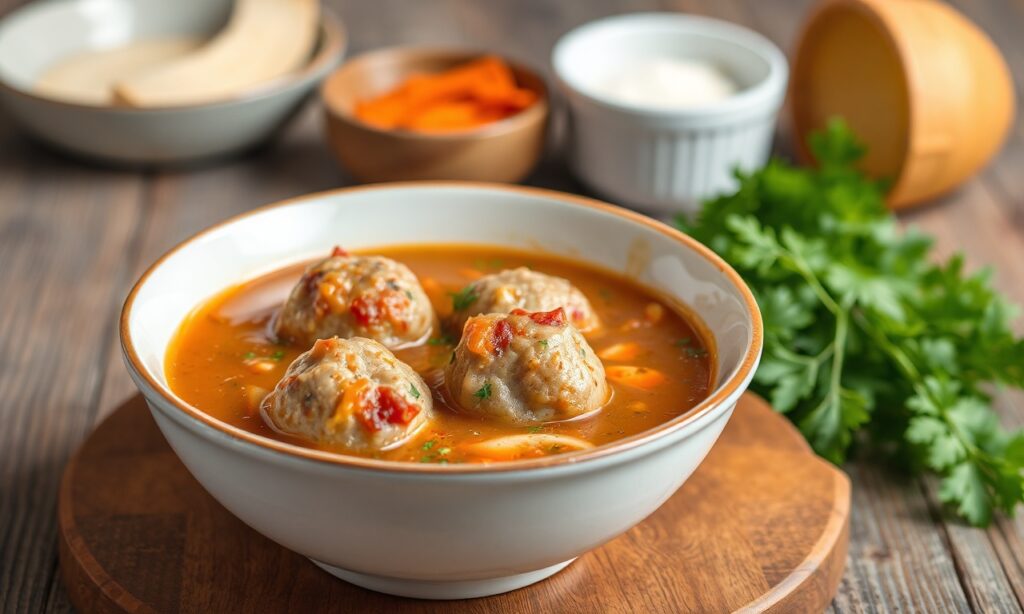
Serve Savory Meatball Soup in warm bowls for better aroma. Garnish with freshly chopped parsley and a light snowfall of Parmesan. Finish with black pepper for a clean, spicy lift.
For the best broth-to-bread ratio, use crusty artisan bread or garlic focaccia. Tear it into pieces and dip frequently so each bite gets both soup and crust. A crisp side salad also helps balance the meal with acidity.
If you drink wine, choose something light to medium-bodied. A dry red can match the beef notes, while sparkling water with lemon can refresh between bites. For general food pairings and the role of acidity, see tannins and how they feel in the palate.
| Nutrient | Per Serving |
|---|---|
| Calories | 320 kcal |
| Protein | 28 g |
| Carbohydrates | 15 g |
| Fat | 18 g |
To explore related comfort-food ideas, check beef stew. For more about soups and how they vary worldwide, visit soup.
FAQ
If you want the smoothest cooking experience, these answers cover the most common questions. Use them to troubleshoot and improve texture, flavor, and timing.
Each answer sticks to practical cooking logic so you can adapt without guesswork. If you test one tweak, keep everything else the same and compare results.
What makes meatballs tender in soup?
Hydrated breadcrumbs and milk help meatballs stay soft. Also, mix gently and avoid aggressive boiling after they go into the broth.
How do I keep the broth flavorful without over-salting?
Use low-sodium broth and taste near the end. You can adjust salt last, after tomatoes and simmer time concentrate flavor.
Can I make this soup ahead of time?
Yes. Cook as directed, cool, then refrigerate. Reheat gently so the greens stay pleasant and the meatballs don’t dry out.
What vegetables work best in meatball soup?
Classic mirepoix vegetables—onion, carrot, and celery—provide a reliable sweet-savory base. Add greens near the end for fresh texture.
Can I freeze Savory Meatball Soup?
You can freeze it, especially before adding delicate greens. If you freeze with greens already in, expect softer texture after thawing, but the flavor remains good.
Future Outlook
As comfort-food trends grow, meatball soup stays relevant because it’s flexible. You can scale it for gatherings, swap vegetables with what you have, and adjust the spice level easily. The method—sear, simmer gently, then finish—remains the same.
This kind of bowl meal also fits modern cooking habits. It encourages batch prep, smart substitutions, and leftovers you’ll actually want to eat. When you crave steady, savory comfort, Savory Meatball Soup delivers warmth in a way that feels both classic and fresh.
See also: Savory Meatball Soup